Back to the (Farming) Future: Q&A with Three Brothers Farm
How a young Wisconsin family is leading innovation in regenerative farming
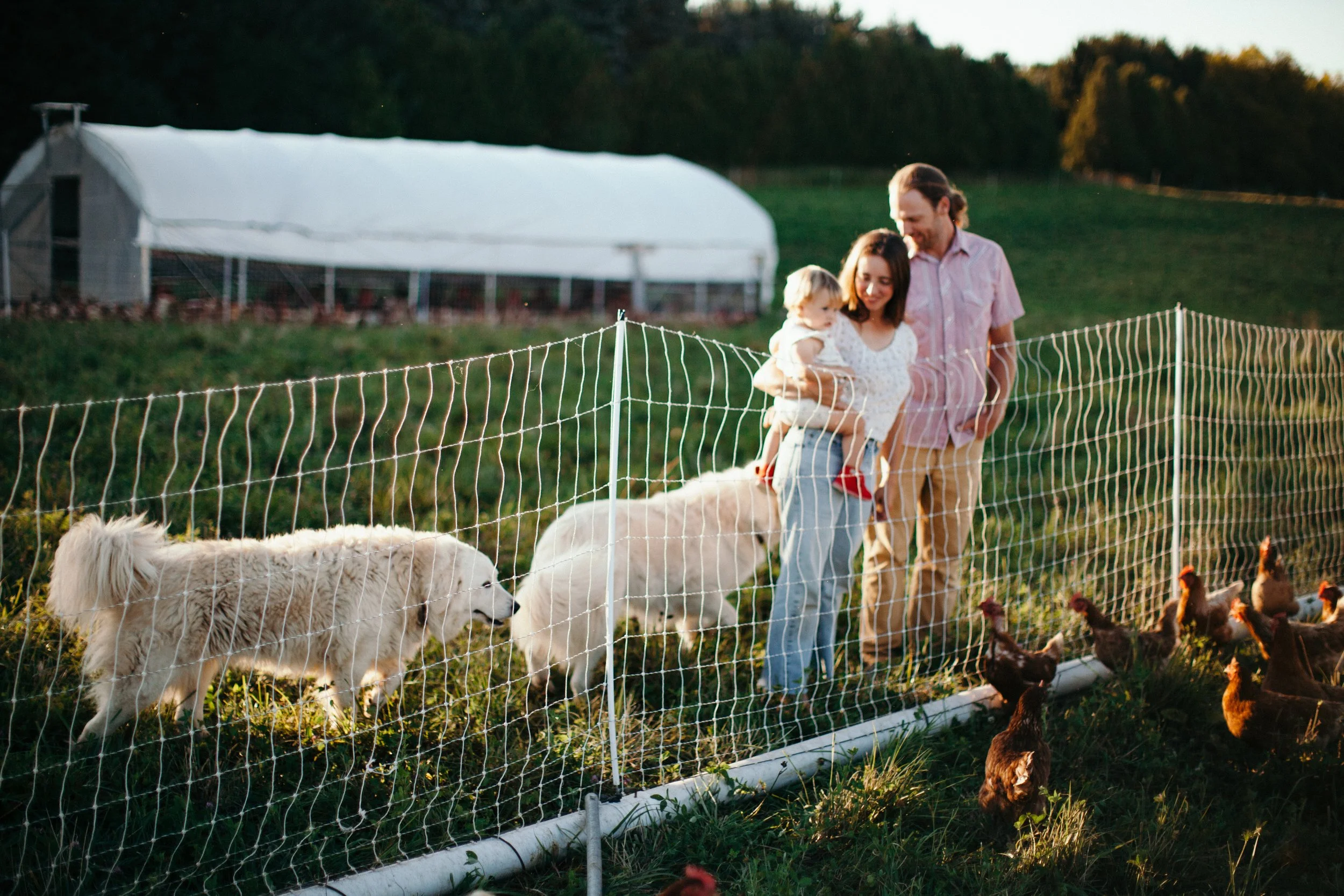
Courtney and Michael with their eldest daughter at Three Brothers Farm.
“No one from your generation wants to take over the farms…” explained my mother-in-law.
We were visiting my in-laws in central New Jersey, an area that was mainly farmland a couple of generations ago. Today, it looks vastly different, with subdivisions, strip malls and nearly every chain restaurant imaginable. When I expressed my disappointment with the transformation, my mother-in-law nodded in agreement before blaming it on the lack of interest in farming. Fortunately, I knew that she was not entirely correct.
There is no denying that the number of farms, especially small farms, in the U.S. has plummeted over the last few generations. According to the USDA, there were over 6 million farms in 1940, compared to only 1.9 million in 2024. According to The American Farm Bureau Federation, 97% of the farms remaining in the U.S. today are family owned. Despite the headwinds that family farmers face, there are reasons to remain optimistic.
Since starting Crunchy Culture, I have met some incredible farmers from my generation (or younger) who are not just willing to take on the challenge but are doing it responsibly, using regenerative practices–and innovating as they go! Courtney and Michael, who own Three Brothers Farm in Waukesha County, Wisconsin, are excellent examples.
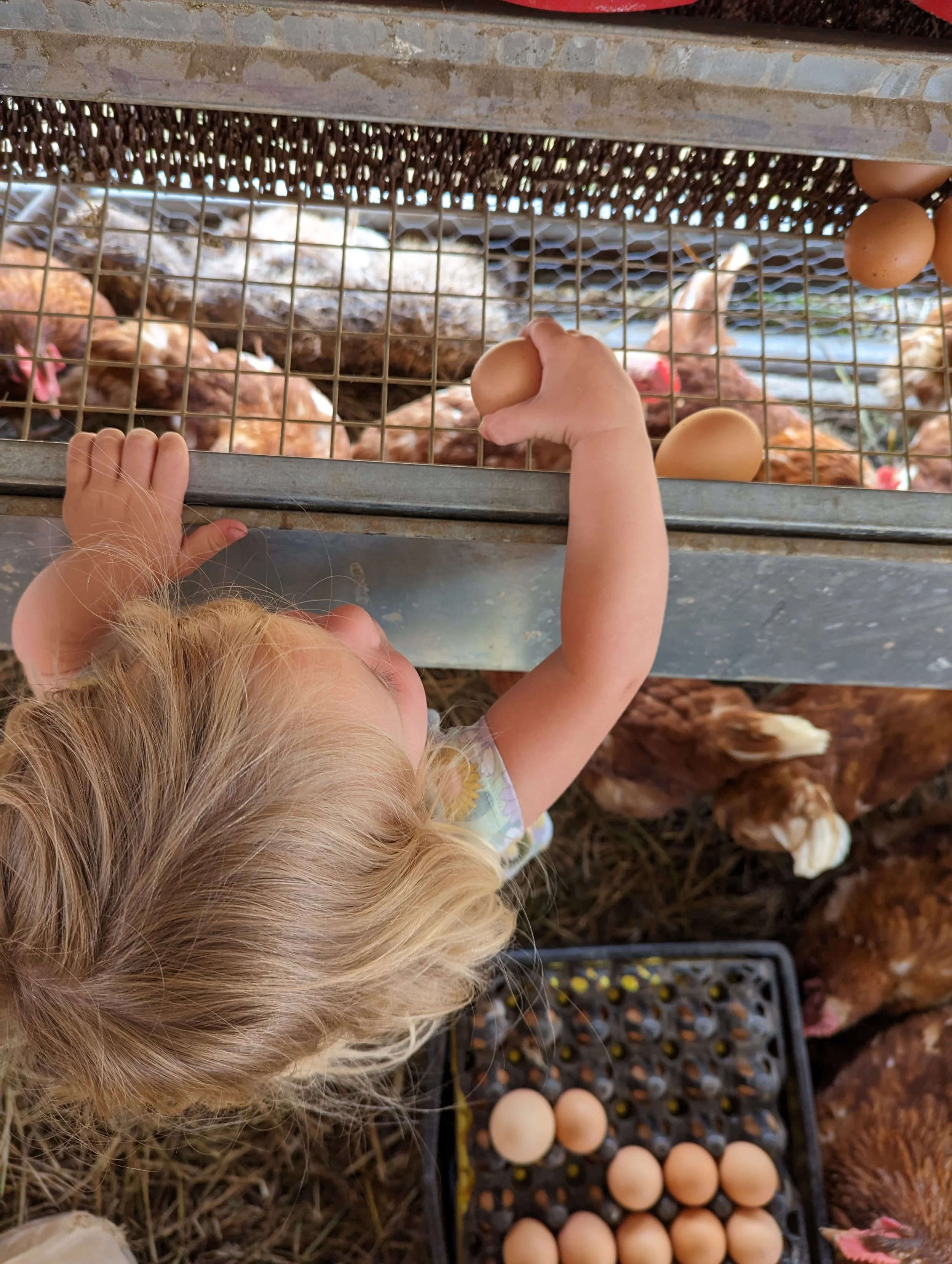
Courtney and Michael’s daughter helps out on the farm collecting eggs.
I discovered Three Brothers through Iron and Acre, a delivery service that aggregates pasture-raised chicken and eggs, grass-fed meats, and produce from small farms around the Midwest. The company delivers to the suburbs of Chicago, aiming to replace conventional grocery store trips. I received three dozen pasture-raised eggs in my first order, and I was curious about the farm they came from, so I did some research…
Located in Oconomowoc, Wisconsin, Three Brothers offers lamb meat, wool and sheepskin products in addition to the pasture-raised eggs that my family enjoyed. The owners are dedicated to restoring and protecting the land while automating one of the most grueling tasks on the farm: moving the chickens.
Three Brothers is the birthplace of HenPen, a sliding fence system for mobile chicken coops (a common regenerative practice). Developed by the couple while expecting their first child, the system saves at least six hours of work each week. They pass the efficiency along to fellow farmers by selling a manual for building the system.
I connected with Courtney via a video call to learn more about the farm’s history and sustainability efforts. As a bonus, I met her three adorable farmhands (kiddos ages 2,4 and 6) who are already learning to help out on the farm.
What is the takeaway from our conversation? Not only is this young family embracing farm life, but they are doing so with ingenuity and consideration for future generations.
In my Q&A with Courtney below, she provides us with a glimpse into the family farm and their innovative technology. She also offers inspiring words for young farm families and consumers like me, who simply want to eat more locally and mindfully.
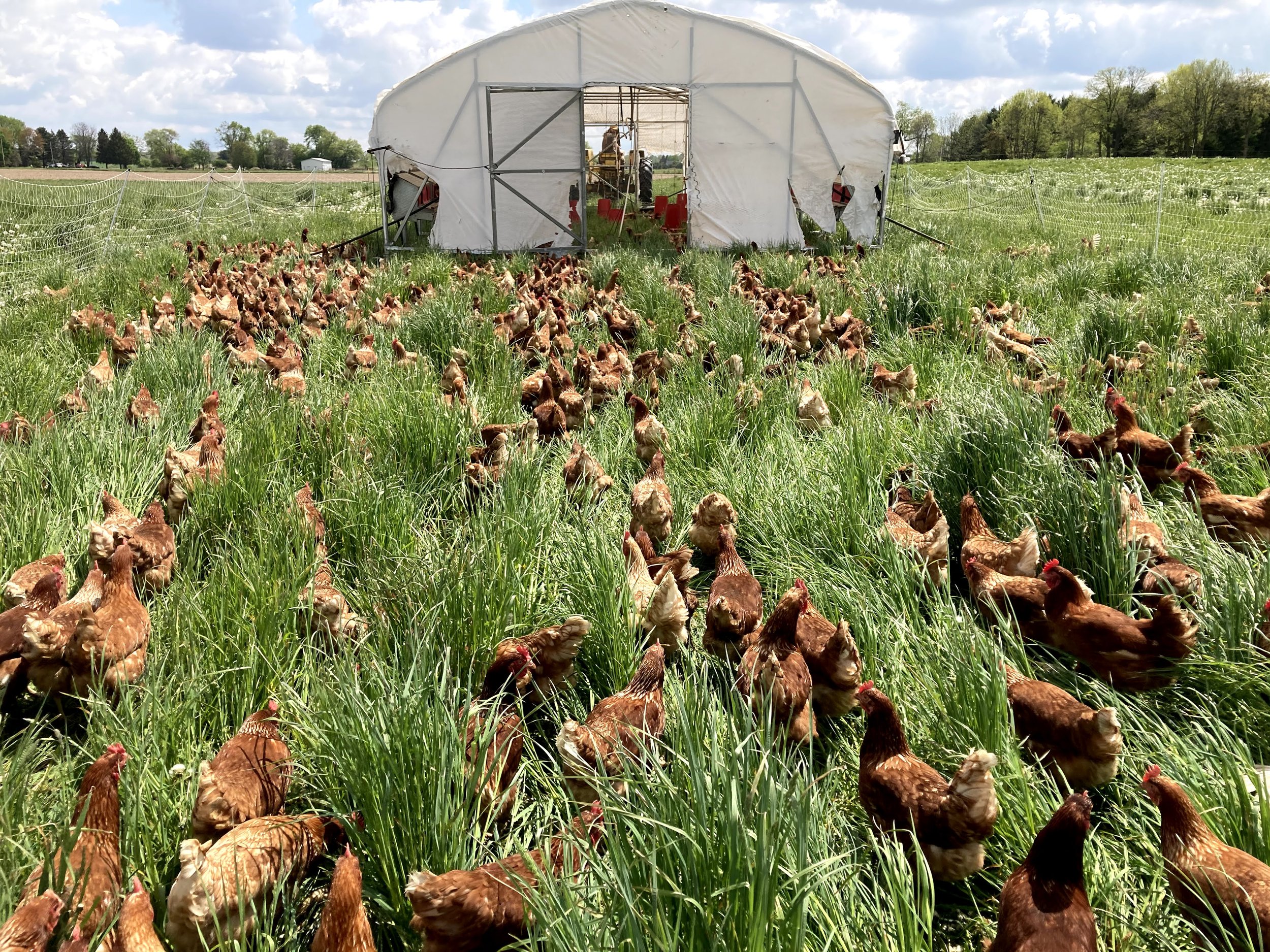
Hens enjoying new pasture.
Q&A with Courtney
Jane: Tell us about your family; how did you get into farming?
Courtney: Michael's grandparents originally bought the farm in 1954. His grandfather always wanted to be a farmer, but when he was a kid, his parents lost their farm during the Great Depression. He couldn’t put his own family in that position, so he always had an off-farm job. The land was rented out to conventional farmers who usually grew corn or soy. Michael grew up on the farm, but it wasn't until his grandfather died and the farm went up for sale that he jumped into farming, without any experience.
I grew up in a small city and it wasn't until after college that, on a whim, I joined some friends on a farm for the summer. I enjoyed it so much that I continued farming and traveling, working on farms to grow [my skillset].
These pursuits took me to Northern Wisconsin, Virginia, Maine, and Italy until I settled back in [Waukesha County] Wisconsin. Michael and I joined forces, bought the farm, and have been growing the farm into Prairie Gold Organics* over the last 11 years.
*Three Brothers eggs are sold under the name Prairie Gold Organics
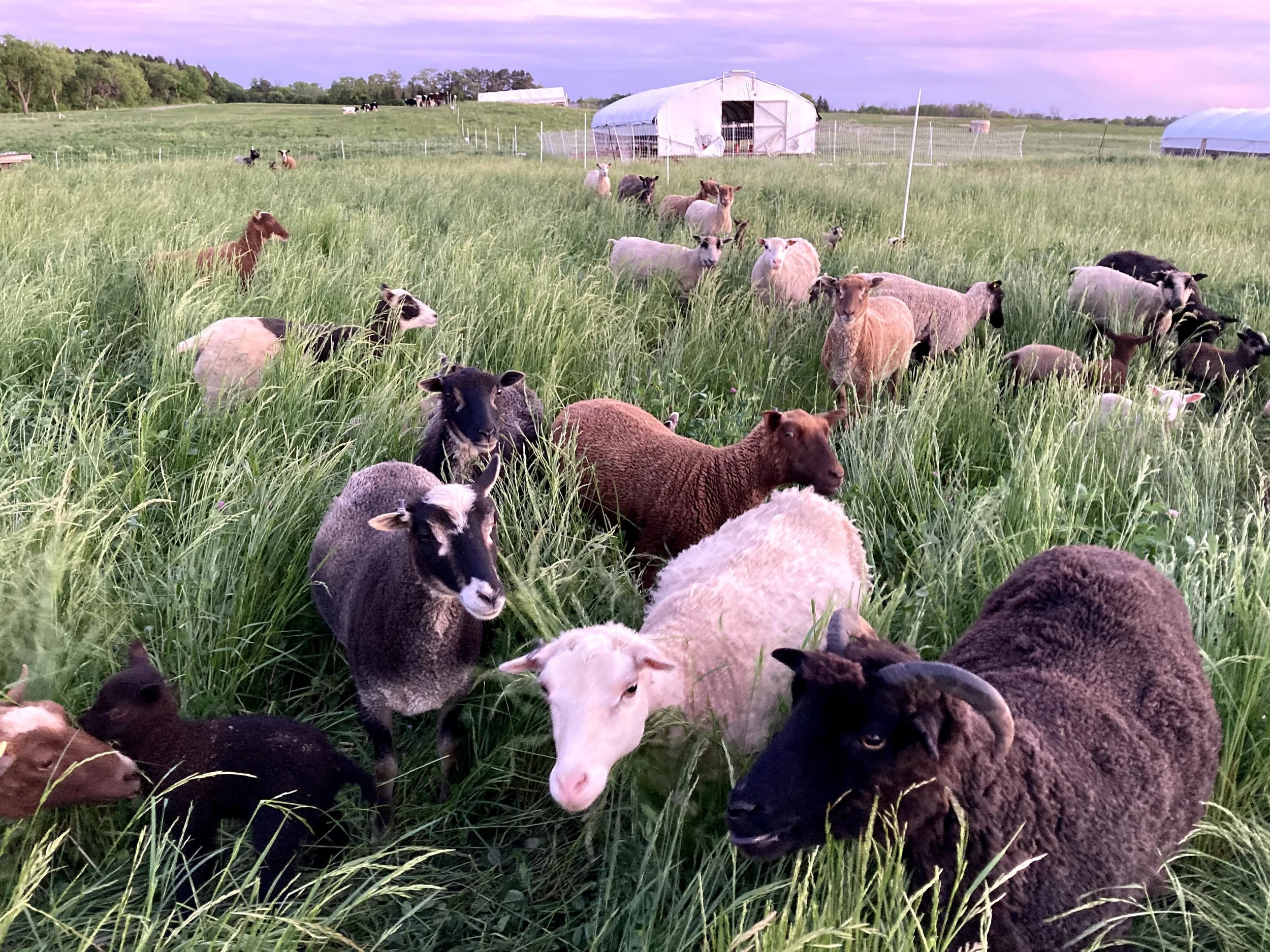
Shetland sheep with their lambs peacefully grazing the pastures.
Tell us more about Three Brothers Farm; what's your mission?
Our mission is to increase the availability of high-quality, nutritious food to as many people as possible, and to do so by taking care of the land and local ecology as best we can. We offer organic, pasture-raised eggs, moving our hens every day during the growing season.
We also have a large flock of Shetland sheep that we raise on pasture, and we sell lamb meat, wool blankets, sheepskins, and other wool products. We have planted 28 acres of pollinator prairie on our 100 acres and have planted over 150 bur oaks to mimic the oak savannas that would have been here before white settlers.
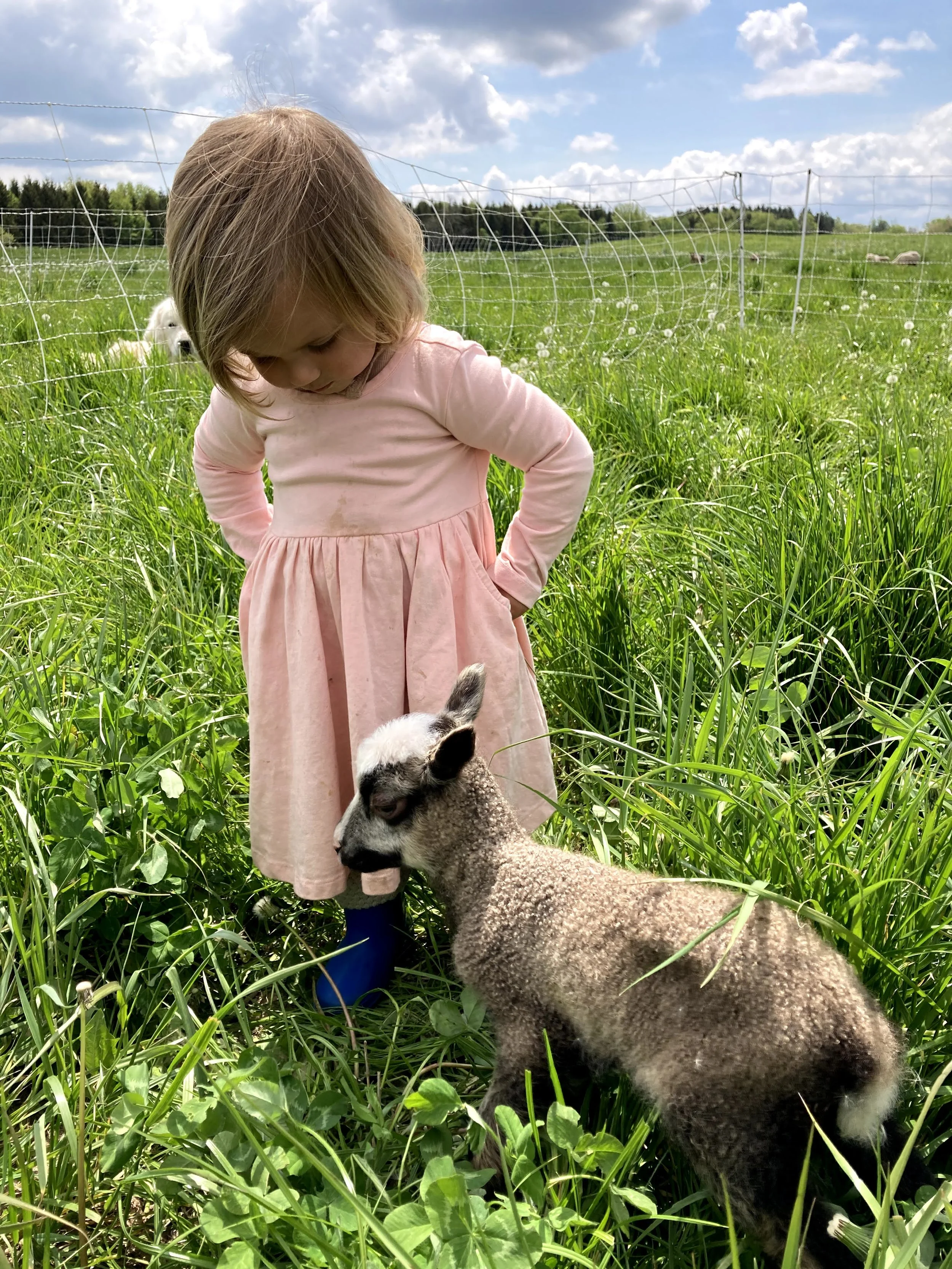
Raising sheep has become a family affair with the kids actively involved.
We enjoy raising sheep because it's something we can do as a family. The animals are a [small] size where our children can be with them and we don't have to worry. It's easy to handle their lambs if we need to. When all the sheep are out at pasture with their lambs peacefully grazing the pastures, it's a beautiful sight.
What is the HenPen? What inspired the design concept?
The HenPen is something we designed seven years ago when we were expecting our first child and the reality of a big change was imminent. We knew we wouldn't have the luxury of working all day, every day, and needed to make the farm more efficient. One of the most labor intensive jobs on the farm was moving the electric chicken netting by hand every few days.
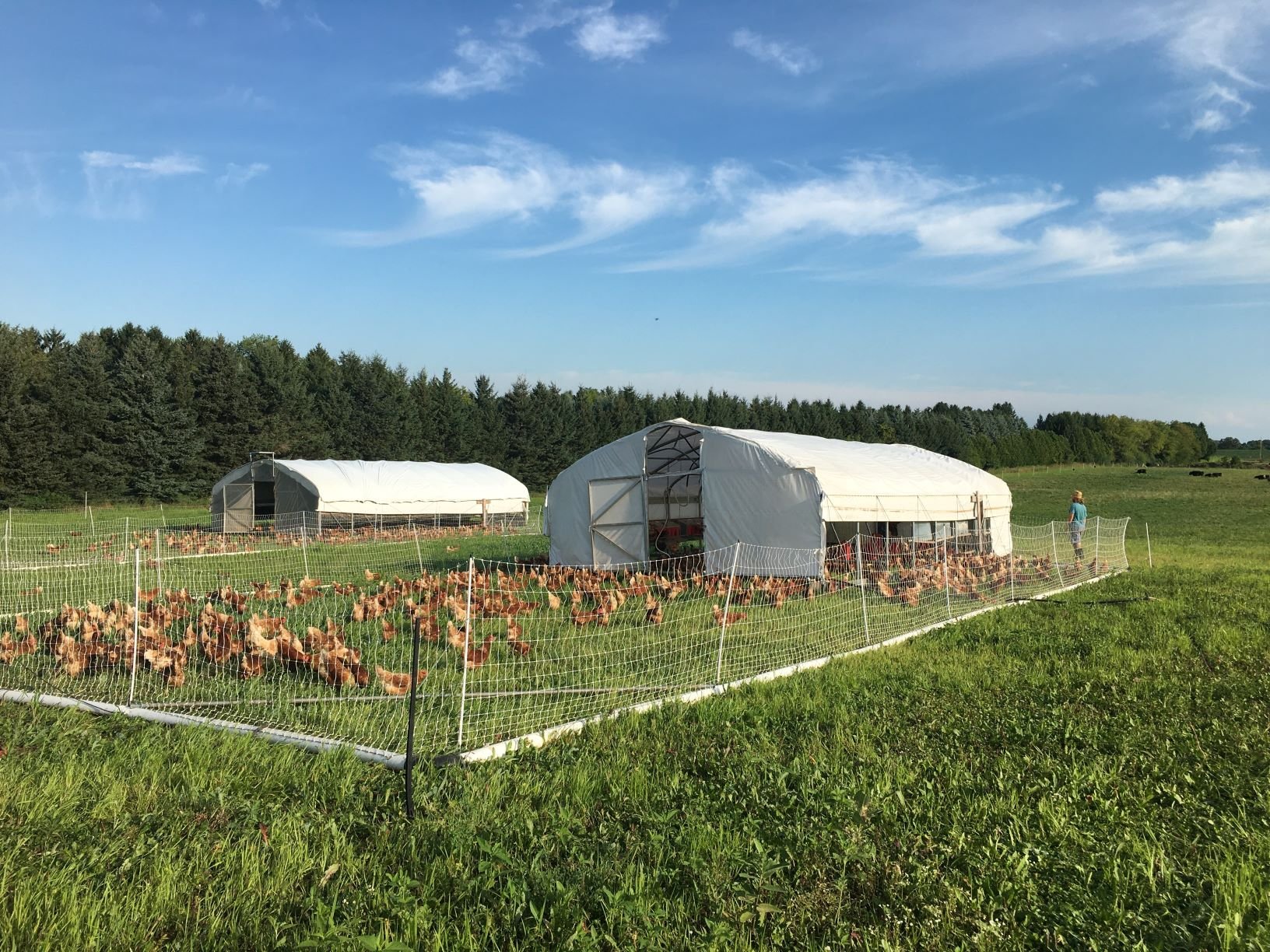
A sliding fence that moves with the coop saves the couple hours of work each day.
Farmers who raise their chickens on pasture generally have a mobile coop that they move every day and a large electric fence around the coop that they need to move with it to give the birds room to roam and fresh grass each day.
We designed a sliding fence system in which the fence moves with the coop and can be pulled by a tractor. This saved us six or more hours per week and contributed to the hens’ health and well-being. With this new system, we can move them every day, rain or shine.
What is your mobile feeding system?
We continue to make improvements on our farm to make things more efficient. We recently added an automated feeding system to our mobile coops that moves with them. It eliminated the need to haul buckets of feed out to the coops by hand, which is a time-consuming and back-breaking task.
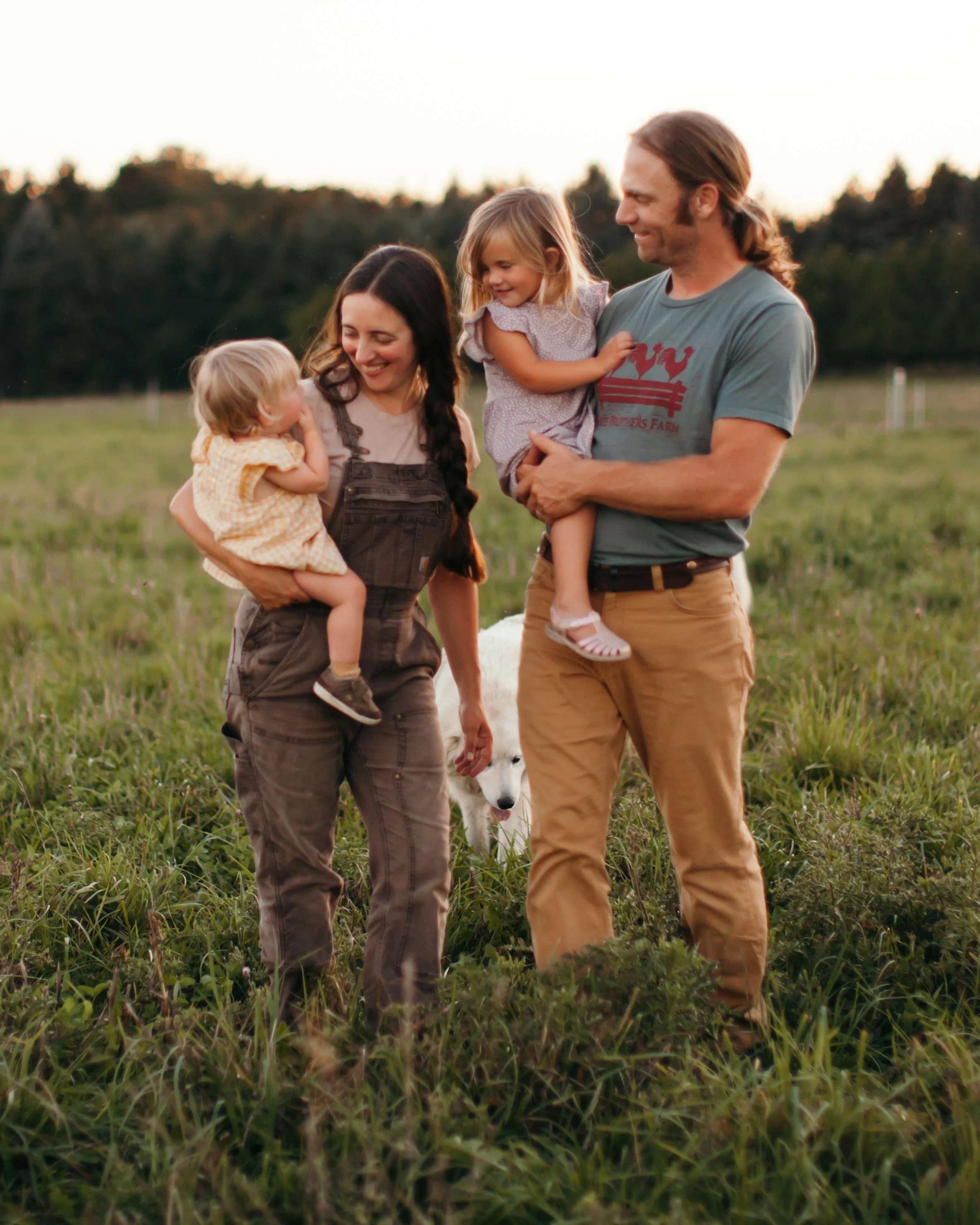
Courtney and Michael inspire young farmers to embrace innovation and enjoy the journey.
What advice would you give to young farm families or families that simply want to eat more locally?
To young farm families, I would say: don't get stuck on perfection and remember to keep you and your family's well-being at the heart of what you're doing. Think about what your needs are for your family and build the farm from there. It might not look like what you think it "should" but if it works for your family that's all that matters.
For people who want to eat more locally, I would say: do what you can; every little bit counts! And know that farmers see every purchase you make and are so grateful!
