Is Hemp the New Bamboo? We Ask the Founder of Airetage
Hemp fabric is sustainable and durable, but can it withstand a sweaty workout?
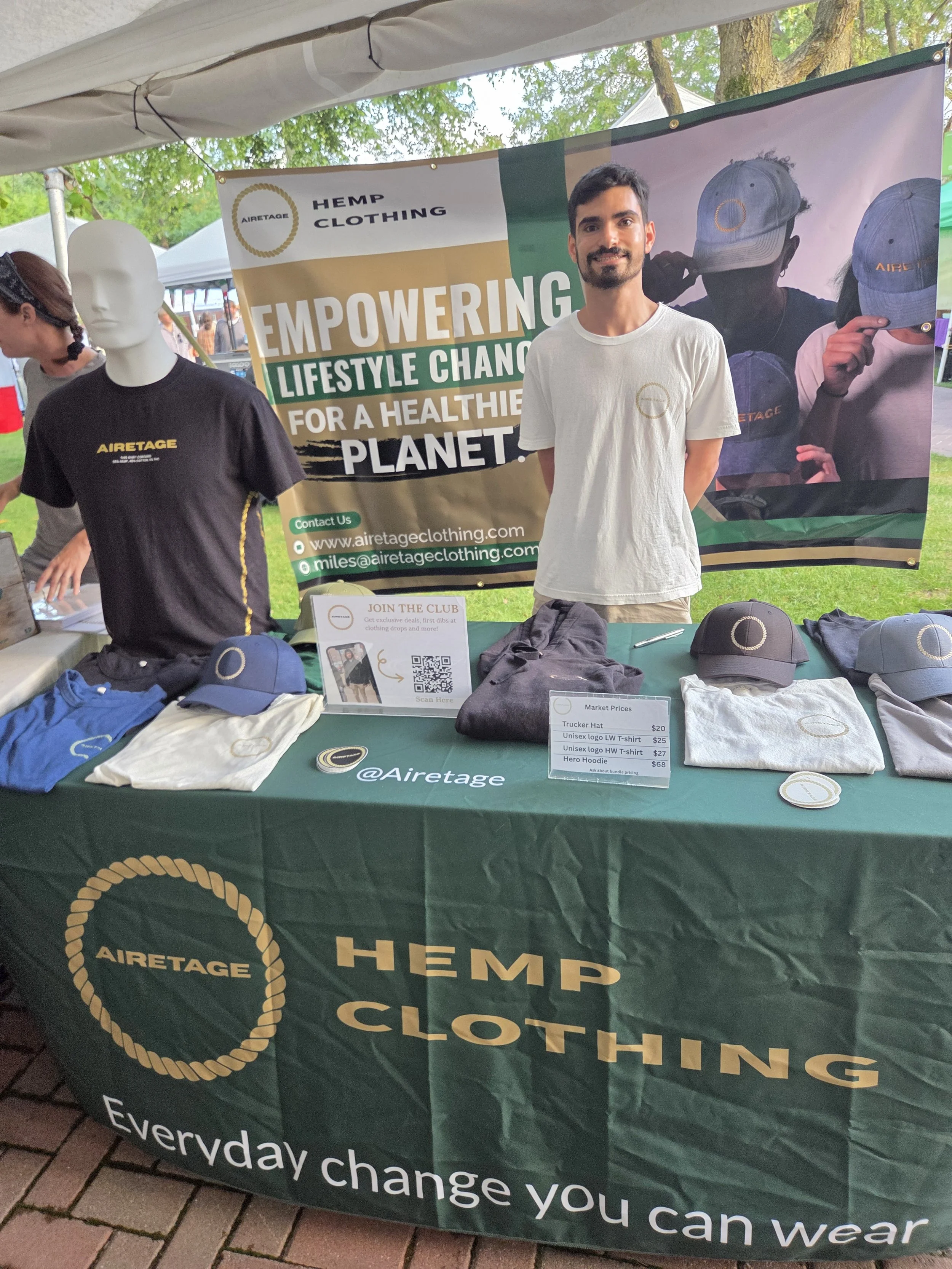
Miles sells his hemp clothing line at farmers markets and educates folks about the benefits.
I met Miles Lazar, Founder of Airetage, at the Taste of Ravinia, a special event that brought the local farmers market to the famous Highland Park music venue for one evening this summer. I have been on a mission to update my wardrobe with all-natural fabrics, so the hemp fashion line caught my eye.
After chatting with Miles, I learned that hemp clothing offers many benefits, such as sustainability and durability. That’s really awesome, but I still had one critical concern: as an avid runner, I needed to know how hemp holds up to a sweat session. Miles reassured me that it does great thanks to its moisture-wicking and natural anti-microbial properties.
I purchased a hemp/cotton blend T-shirt and have really enjoyed running in it. While the moisture-wicking properties may not match some of the performance fabrics out there (usually polyester and nylon), the shirt feels much more breathable and comfortable than the tech shirts I’m used to.
The shirt worked out great, but when I asked Miles what his best-selling product was, I was surprised to hear that his hats are the most popular. Miles and I decided to collaborate on the very first piece of Crunchy Culture merchandise: Crunchy Hemp Hats! Check out these sustainable snapbacks in our online store.
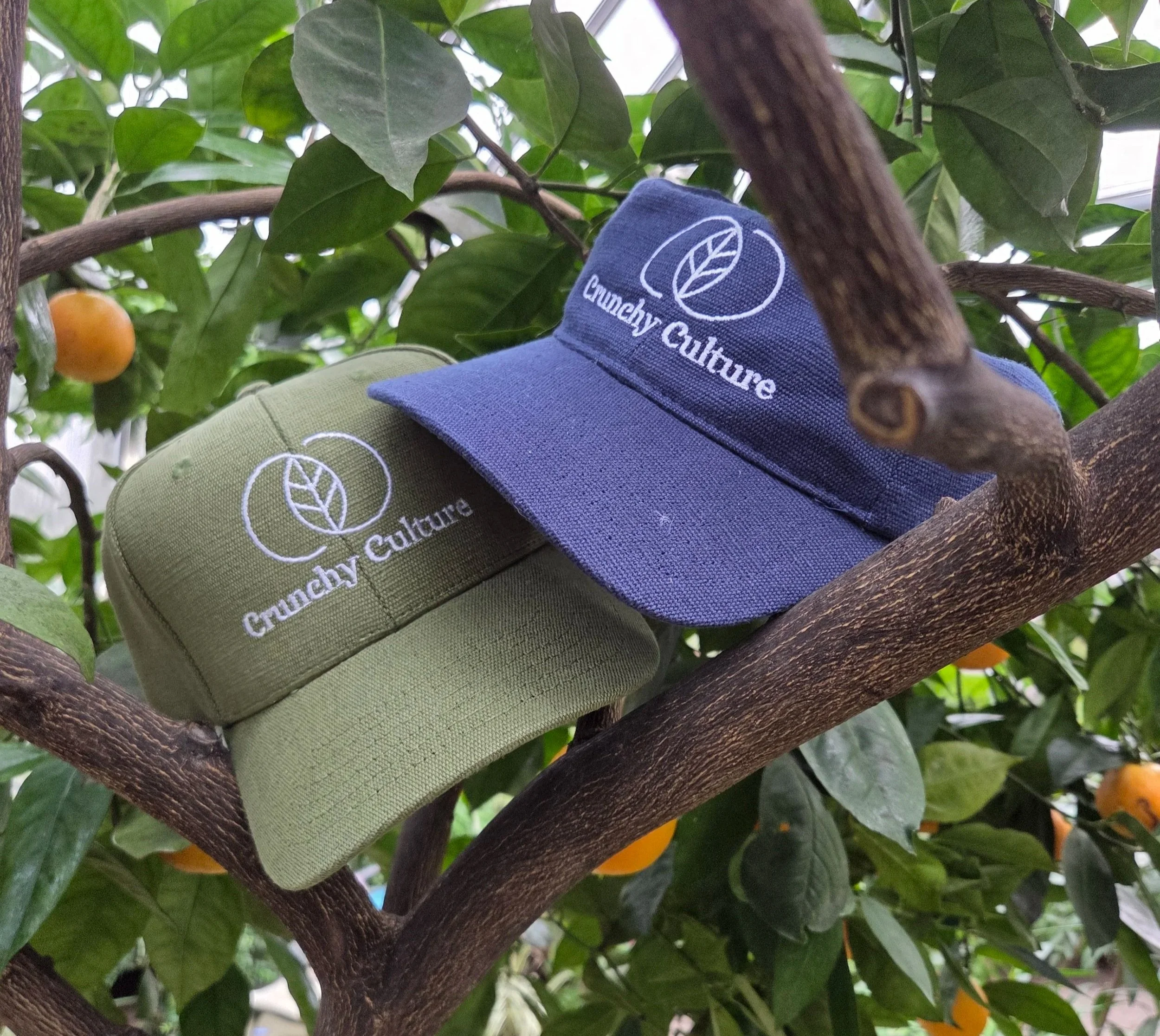
Crunchy hemp hats made in collaboration with Airetage.
Whether you are looking to be more eco-friendly with your clothing choices, or eliminate synthetic fibers from your wardrobe, hemp could be the answer. Read our Q&A with Miles below to learn what makes this fabric so versatile and sustainable.
Q&A with Airetage Founder, Miles
Jane: Tell us about yourself and your background
Miles: I’m Miles Lazar, a Chicago-area native who cares about how clothes feel, how they’re made, and what they say about our values. I grew up spending summers with my mom’s eco-conscious side of the family, and their “house rules” shaped the way I think about consumption and responsibility. I also live with cerebral palsy on my right side, which, paired with some classic social anxiety, made me sensitive to comfort and function. That lens still guides how I design and evaluate clothing.
Professionally, I’ve blended entrepreneurship with hands-on retail experience. Working the sales floor taught me that you can’t please everyone with one design, that visuals stop the scroll and fit closes the sale, and that feedback only helps when it comes from the right audience. I’ve carried those lessons into product development, supply-chain problem-solving, and building a manufacturing network that balances quality, durability, and cost.
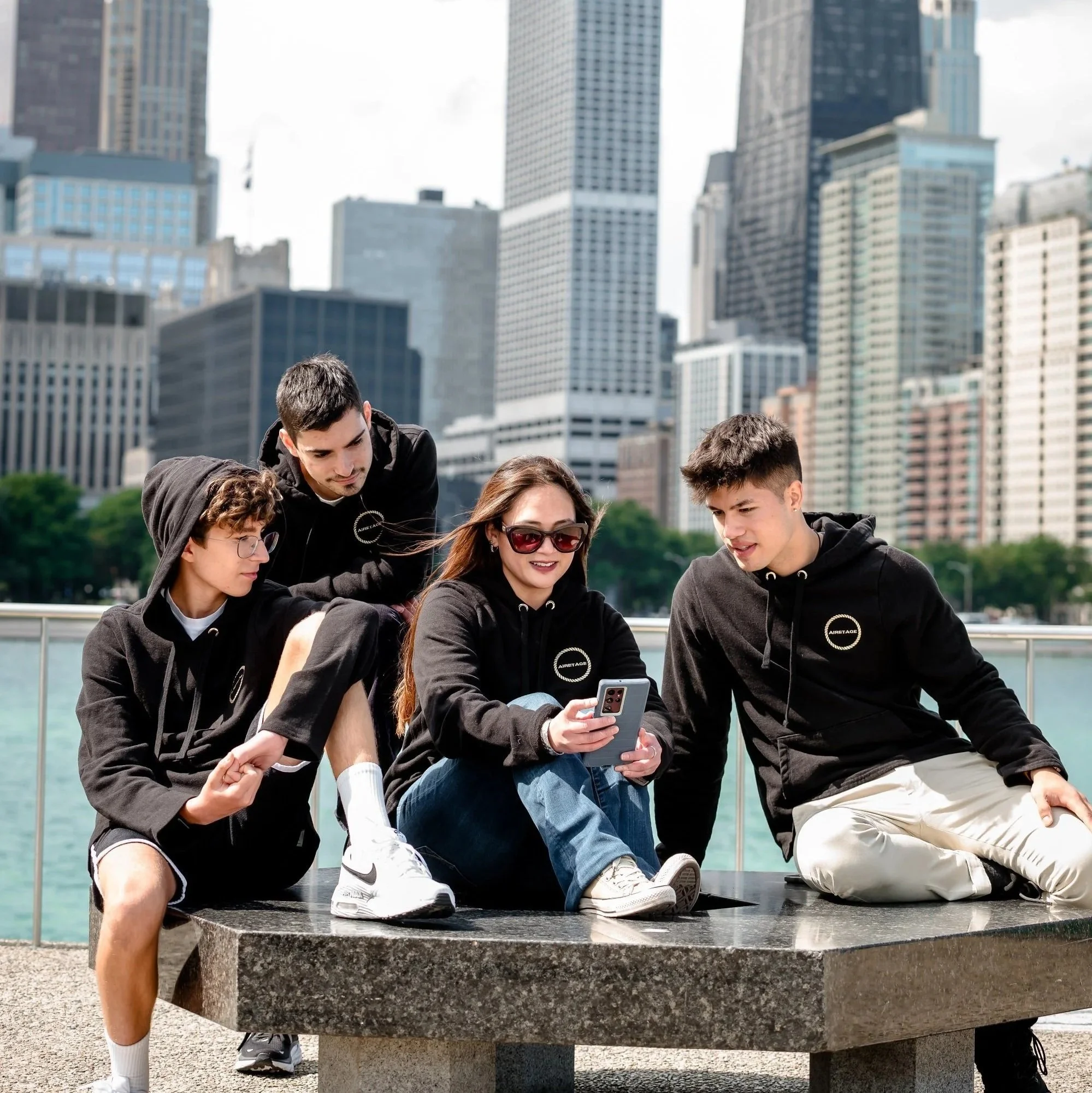
The hoodies that started it all. (Photo courtesy of Airetage)
Beyond the day-to-day, I’m active in the community, speaking about hemp and sustainability, hosting and joining podcasts, and showing up at local farmers markets and festivals to meet people where they are.
My ethos is simple: make clothing that’s comfortable, long-lasting, and honest about its materials. That’s why every piece I create keeps hemp at the forefront with at least 50% of the fabric being hemp. It’s not a gimmick; I believe in the material and what it can do for both people and the planet.
What inspired you to start Airetage?
In high school, I took a business Incubator course that allowed me to go from an idea to a minimum viable product. I knew I wanted to make something that people would always need, like clothing. Whatever I decided to build would be environmentally friendly in some way.
Every winter day in high school, I walked outside wearing only a hoodie because I was too cool to be dressed for the weather. For my class project, I tried to keep the idea simple: Make the best hoodie possible. I didn’t know what I meant by that; I just knew that it should be durable, comfortable and sustainable.
I started Googling “what are the best materials to make clothing out of?” and hemp was one of the options. That piqued my interest because I didn't think it was possible to make clothing out of a drug. I quickly learned four very important things:
1) Hemp and cannabis are not the same exact plant. They are from the same plant family but different plants. Like cousins.
2) There is a rich tradition of hemp clothing in civilizations around the world including the United States.
3) Hemp has many amazing sustainability benefits as a textile and as an agricultural crop.
The last thing I learned was the most exciting:
4) At the time, in 2018, hemp clothing was rare due to decades of stigmatization and laws that stifled the American hemp industry.
The clothing I found was very ‘hippy core’. I thought to myself: “This will be great. I'll just make some normal looking hemp clothing, post it on social media and be on a yacht in Monaco after I graduate from high school.”
But wait, where do I get that type of clothing manufactured? And how much would that cost me? I didn't have a clue how to answer these questions. But the fundamental business was there: design environmentally sustainable clothes using the hemp plant for the everyday environmentalist. And that is the intention I set out with.
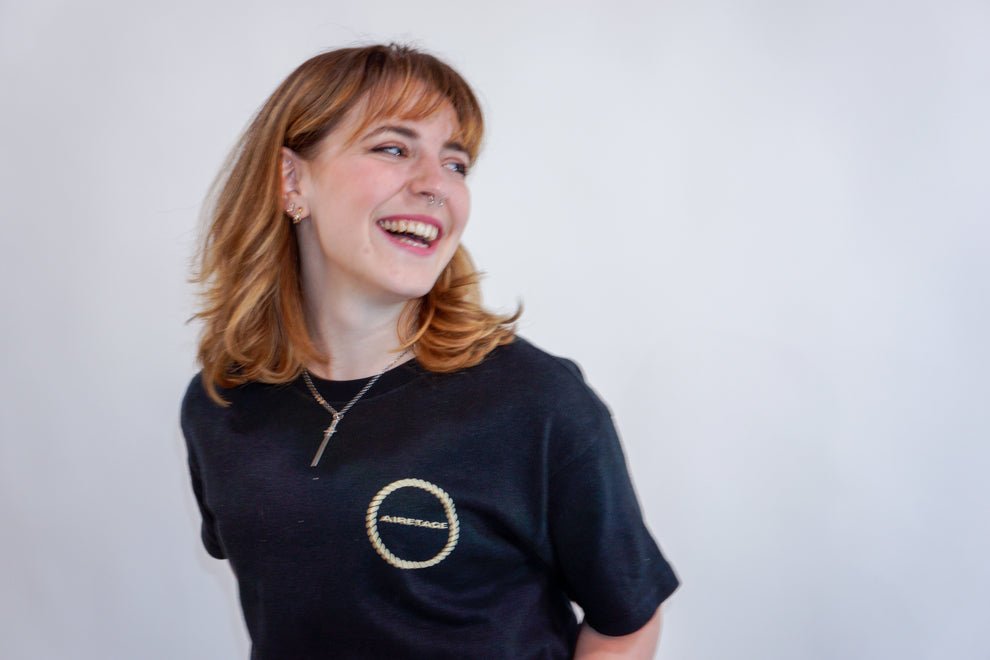
Photo courtesy of Airetage.
What makes your brand "crunchy-conscious"?
At Airetage, “crunchy-conscious” means more than just looking eco-friendly—it’s about living by our ethos. Every product we make contains at least 50% hemp because we believe in the material, not because it’s a marketing gimmick. Hemp is one of the most sustainable textiles available, and keeping it central to our collections reflects our long-term commitment to building a healthier planet. That belief extends into our broader approach: we use water-based inks for screen printing, work with local cut-and-sew partners when possible, and design clothes meant to last.
For me, being “conscious” isn’t about a single choice—it’s about keeping sustainability at the core of the brand. I want to show people that hemp is more than just a buzzword — it’s a powerful material that can help reshape the way we think about clothing. Whether I’m setting up at local farmers markets and festivals, working on new designs, or sparking conversations through podcasts and speaking events, I’m passionate about building a community around conscious fashion and helping people wear their values.
How does hemp compare to other natural fabrics (i.e. cotton and bamboo)? What are the benefits and drawbacks?
Hemp is exceptional; it requires minimal resources to grow. Compared to cotton, hemp uses around 50% less water and one third the land area for the double the fiber yield. and doesn’t require pesticides or herbicides to grow. Non-organic cotton, on the other hand, is one of the most chemically intensive crops in the world.
Hemp fibers are also stronger, naturally resistant to bacteria, and they actually get softer with wear and wash without breaking down as quickly as cotton. Hemp has a higher tensile strength which measures the strength of the fibers. This means that hemp garments hold their shape longer over time. Cotton is familiar and soft right off the rack, but hemp offers a durability and longevity that cotton can’t quite match. Moreover, hemp offers natural moisture wicking, uv resistance and anti microbial properties. These performance attributes make it an ideal choice.
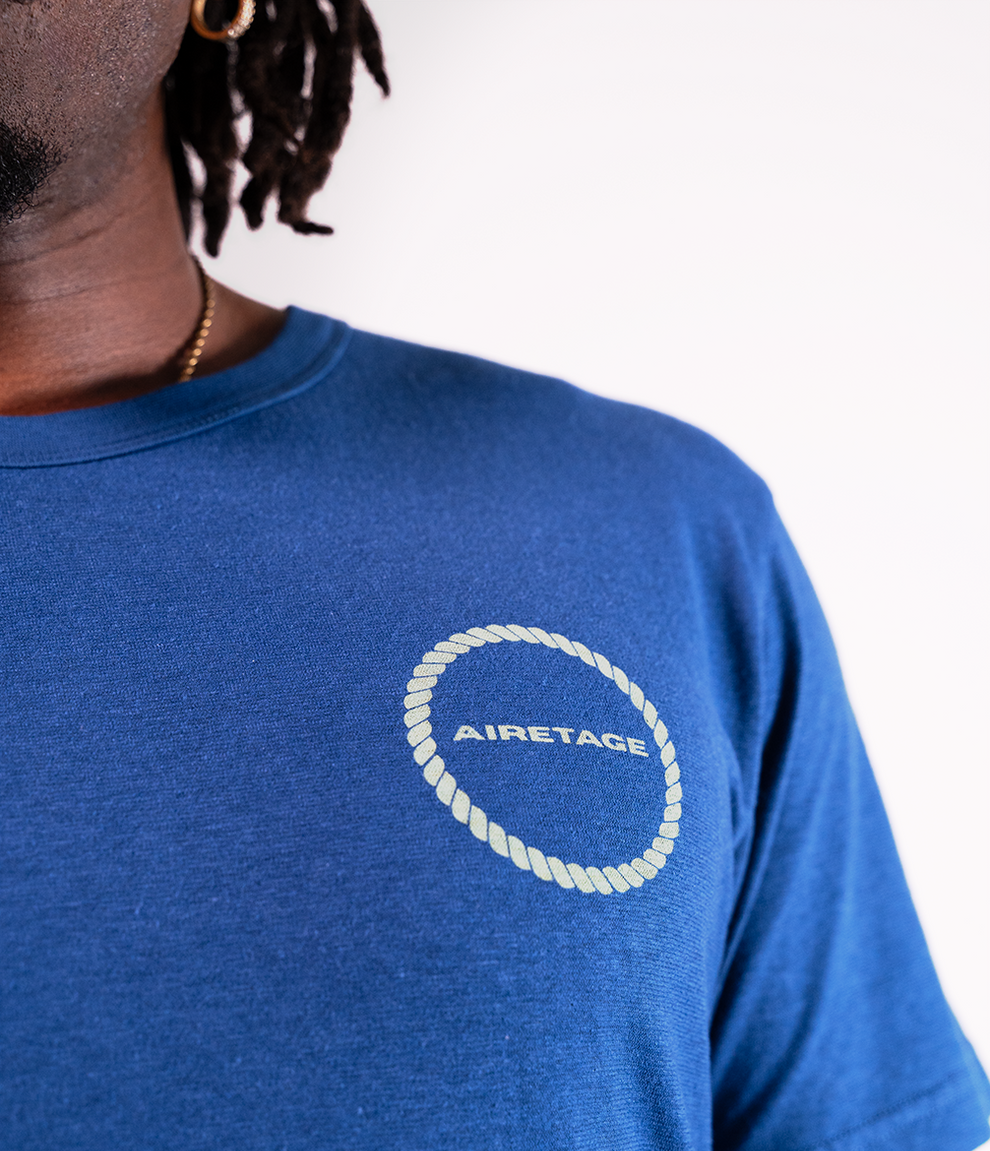
Photo courtesy of Airetage.
When you compare hemp to bamboo, the difference comes down to processing. Bamboo is often marketed as eco-friendly, but turning raw bamboo into a soft fabric usually involves heavy chemical processing. Hemp can be woven into textiles with far less chemical intervention, which makes it a more straightforward sustainable choice.
Hemp isn’t perfect. The biggest drawback right now is cost and inefficient supply chains. Because the hemp textile supply chain is still smaller and less industrialized than cotton, it’s more expensive to produce. The bottleneck in the manufacturing of hemp textiles revolves around the step where the fiber is pulled from the stem of the plant.
The hemp stem has two main layers, a woody inner core, and a fibrous outer layer. This core can be used to make hurd which is made into animal bedding, insulation etc. The fibrous outer layer is bonded to this woody core by a pectin. Pectin is strong and requires two separate steps to separate the fiber from the core. The plant is first retted, which essentially means letting the plant rot to break down the pectin.
There are three types of retting: chemical, water and field retting. Water retting is the most popular method where the stalks are submerged in water for up to two weeks to help dissolve the pectin. It is also said that this method produces the highest quality fibers. That’s part of why brands like Airetage exist — to help grow demand, expand the supply chain, and eventually make hemp clothing as accessible as cotton.
https://www.britannica.com/plant/hemp
There is some concern about the chemicals used to grow non-organic cotton. Is that a concern with hemp as well?
Hemp is widely recognized as a low-input crop. It grows densely and vigorously, which naturally suppresses weeds, and it is inherently pest-resistant. That means it typically requires little to no insecticides or herbicides, unlike cotton (Textile Exchange, 2023; CFDA Fiber Guide: Hemp). Hemp’s resilience makes it one of the cleanest fiber crops to cultivate, especially when compared to conventionally grown cotton.
https://textileexchange.org/app/uploads/2023/04/Growing-Hemp-for-the-Future-1.pdf?
https://cfda.com/resources/materials-hub/article/fiber-guide-hemp/?
Where can people find your products?
www.airetageclothing.com. They can also follow @Airetage on their preferred social media platform
