The Alchemy of Natural Dyes with Down to Earth Goods
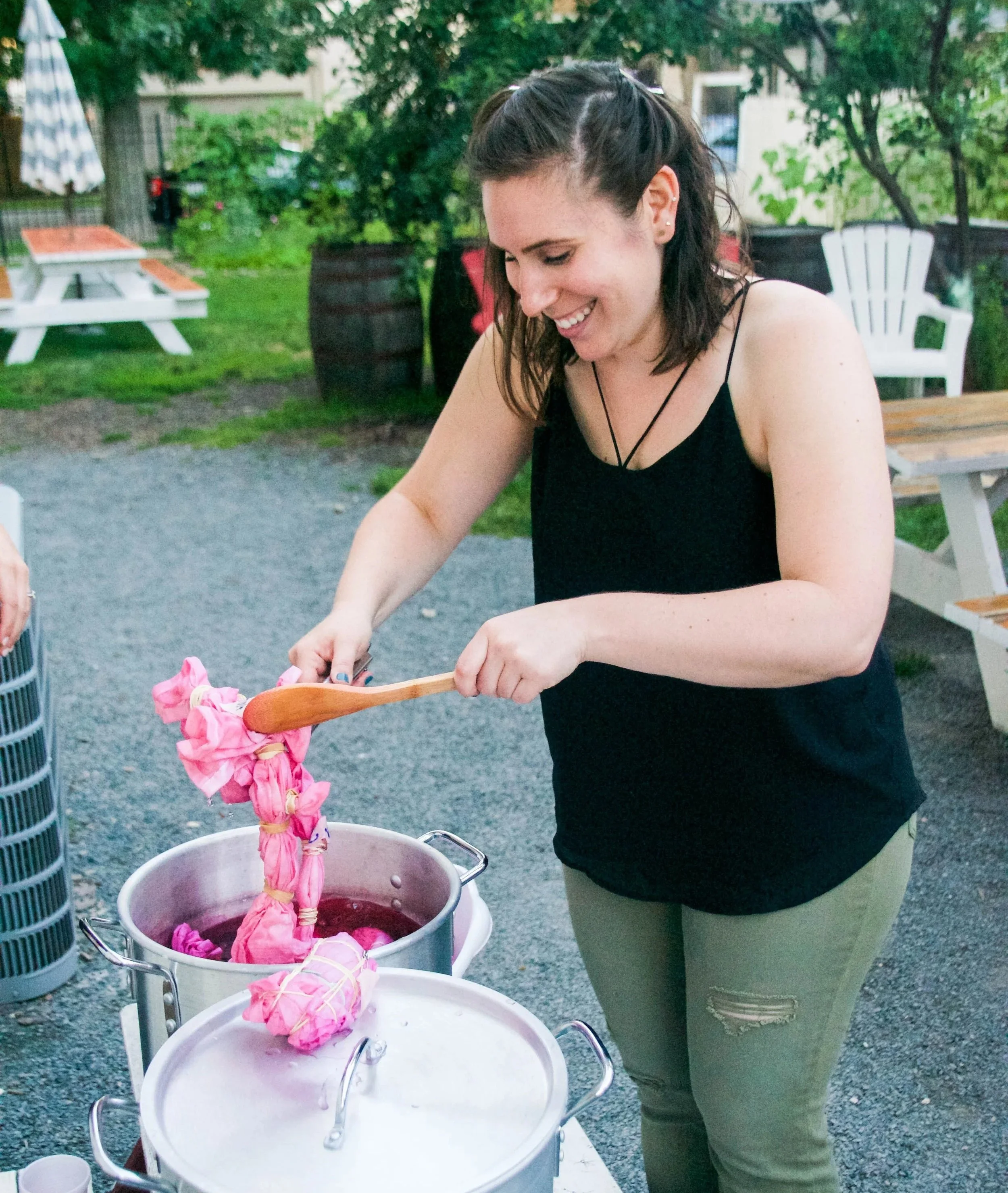
Down to Earth Goods owner, Erica works her magic. (Photos courtesy of Down to Earth Goods).
The art of fabric dyeing always transports me right back to those carefree summer days of childhood. Tie-dyeing was, hands down, one of my favorite activities at day camp. Something about the process deeply spoke to me. Maybe it was the suspense of waiting to see vibrant patterns emerge on a stark white cotton t-shirt; perhaps it was the relaxed, unpredictable artistic process compared to the rigid drawing and painting classes I took every Sunday. Or maybe it was simply the fact that the final result was largely outside of my control, which allowed my perfectionist tendencies to let up a smidge.
Whatever the reason, I am still enthralled by the art form several decades later—just in a slightly more “crunchy” way.
Natural Dyeing: How Did I Not Know About This?!
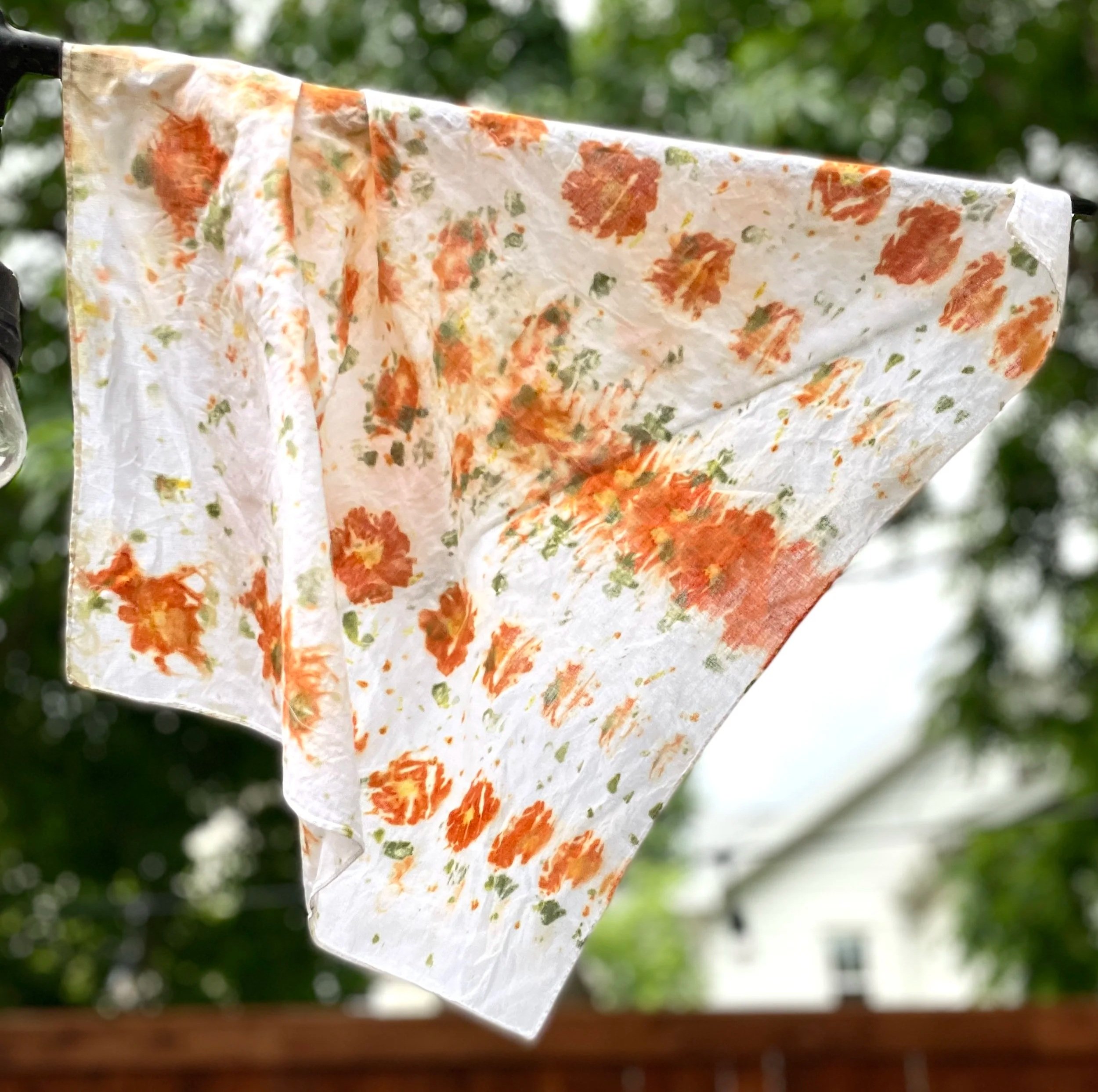
A floral masterpiece from Down to Earth Goods.
Last year, I met an artist friend who introduced me to the ancient Japanese art of hapazome (flower pounding), and I was absolutely fascinated. The idea of dyeing natural fabrics using only flowers and plants felt so much more appealing than the synthetic, chemical-heavy dyes of my day camp memories. Little did I know, there was an entire world of natural dyeing methods and plant-based sources just waiting to be unearthed.
Enter Erica, owner of Down to Earth Goods. We were introduced by a mutual friend, and after spending just a few minutes exploring her stunning work, I knew I needed to learn more.
It turns out there are so many unique ways to dye fabrics naturally: Shibori using indigo, bundle dyeing with steam, and traditional immersion dyeing. Even more surprising is the long list of everyday items that can serve as dye sources. We're talking food waste (avocado pits and onion skins), plants (leaves and flowers), coffee, and even insect shells!
Artistic Wizardry
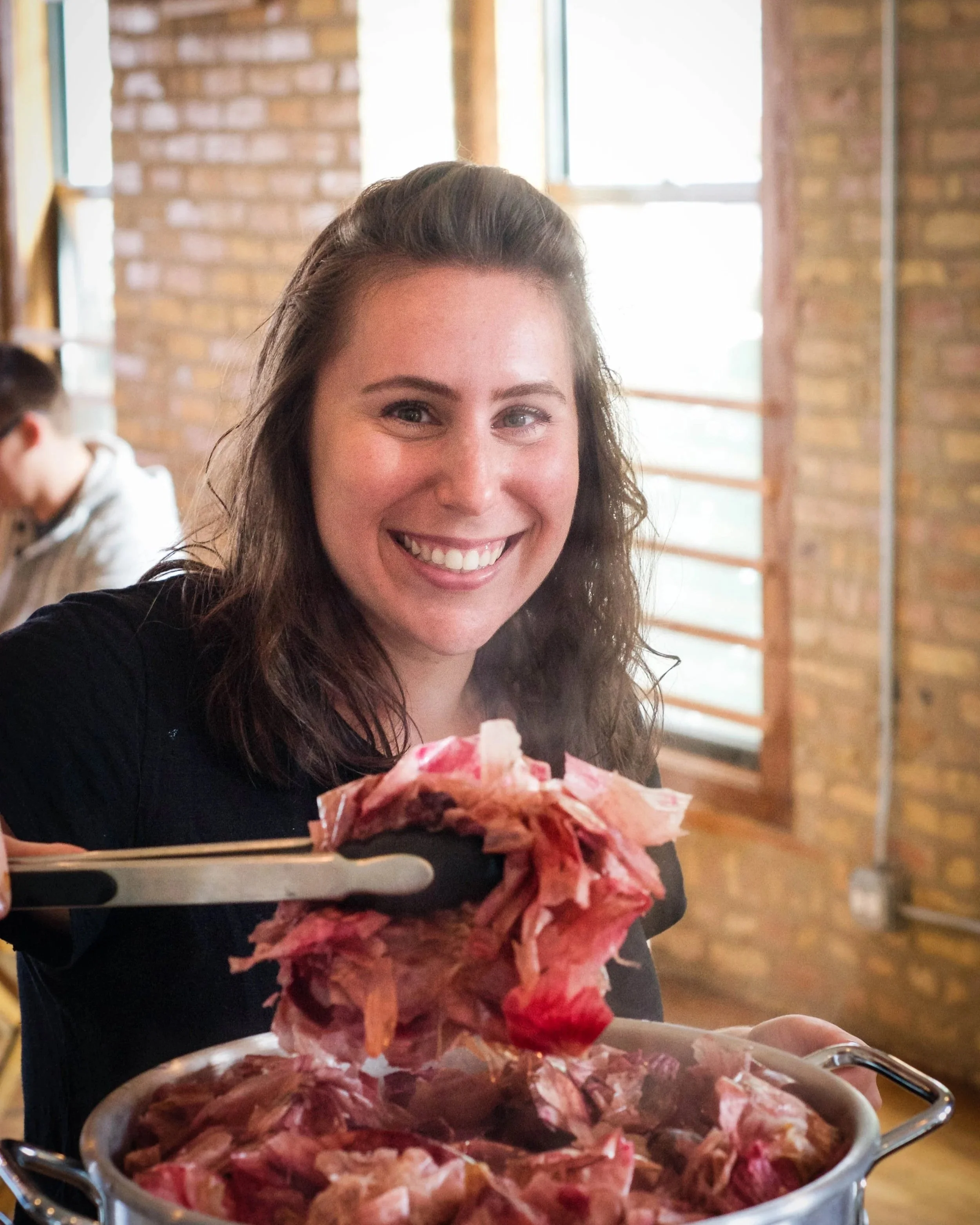
“I’m literally a witch,” Erica laughed as she described her craft. She was joking (I think!), but the magic behind her work is undeniable. Aside from the gorgeous final products she creates, Erica’s description of the natural dyeing process as a “moving meditation” really resonated with me as someone who can usually only meditate while on the go in nature.
A textile designer by trade, Erica now pours her creativity and zeal for sustainability into her brand. She also has a deep passion for sharing her wisdom with others through hands-on workshops in Chicagoland (keep reading to find one you won’t want to miss!).
Q&A with Erica, Owner of Down to Earth Goods
1) Tell us about your background. What motivated you to start Down to Earth Goods?
"My professional background is as a textile designer, working across the fashion and home goods industries for brands big and small. I quickly learned about the toxicity of the supply chain while working at my first job in the fashion industry, and I wanted to find a way to make a difference.
I joined some sustainability committees, got a graduate certificate in sustainable textiles, and learned more about the waste produced in the dye process specifically. This led me to study natural dyes, and Down to Earth Goods became a way I can share this with others through workshops, events, and naturally dyed goods."
2) How did you learn natural dyeing? What techniques do you use?
"I learned about natural dye specifically through workshops led by others and independent study, along with a lot of experimentation! I use Shibori techniques with immersion dye, flower pounding, and my current favorite is bundle dye using steam."
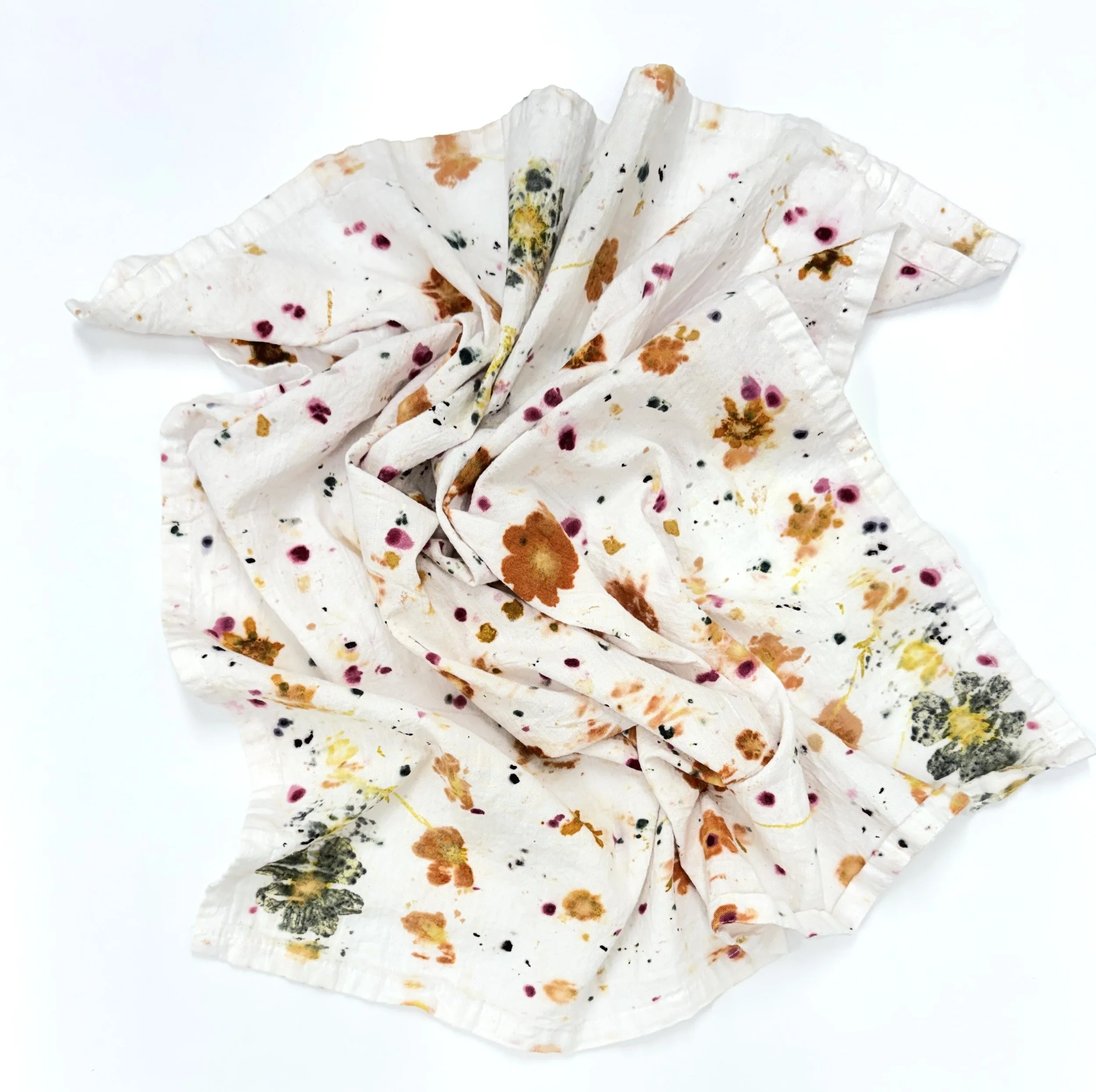
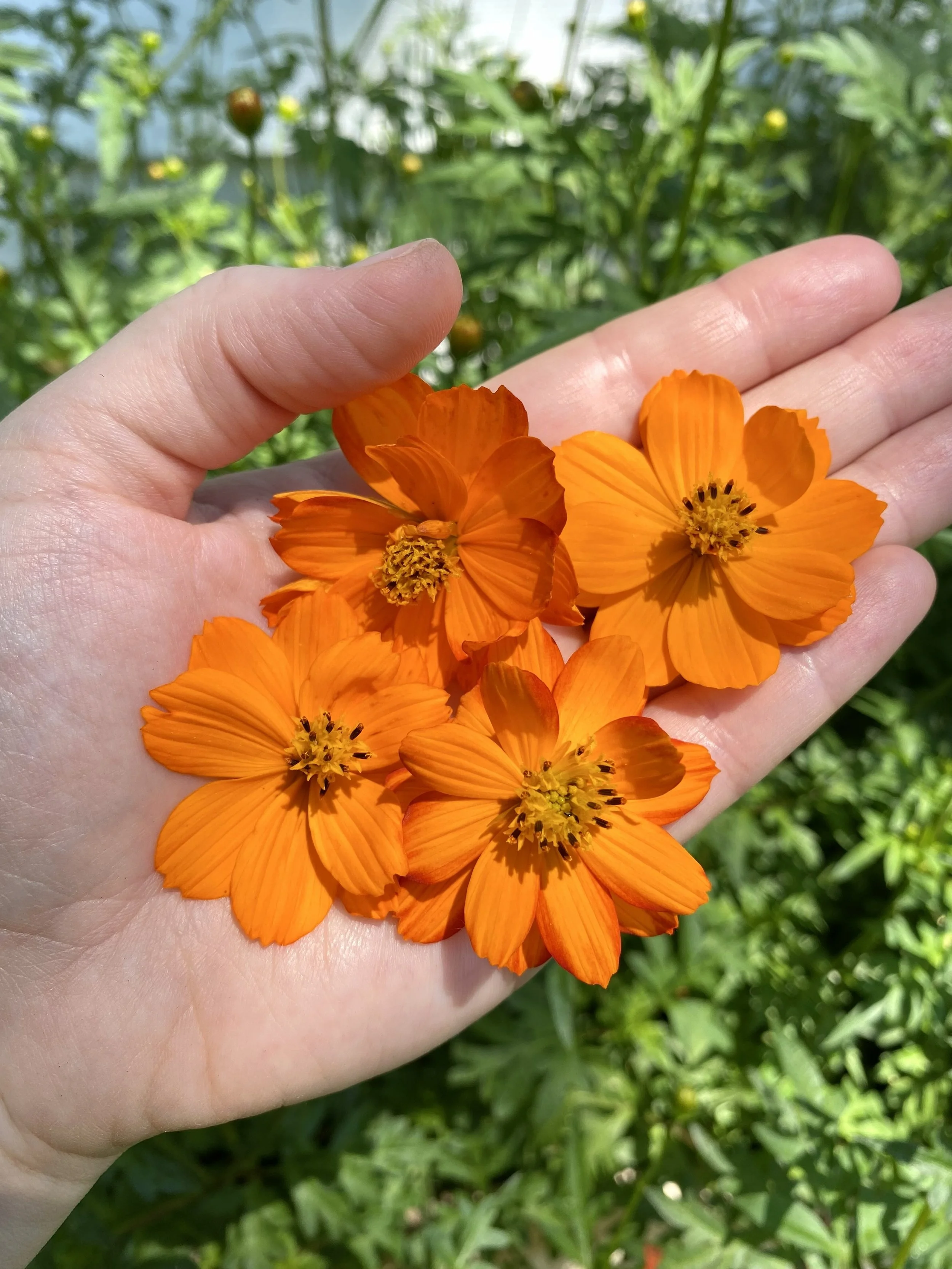
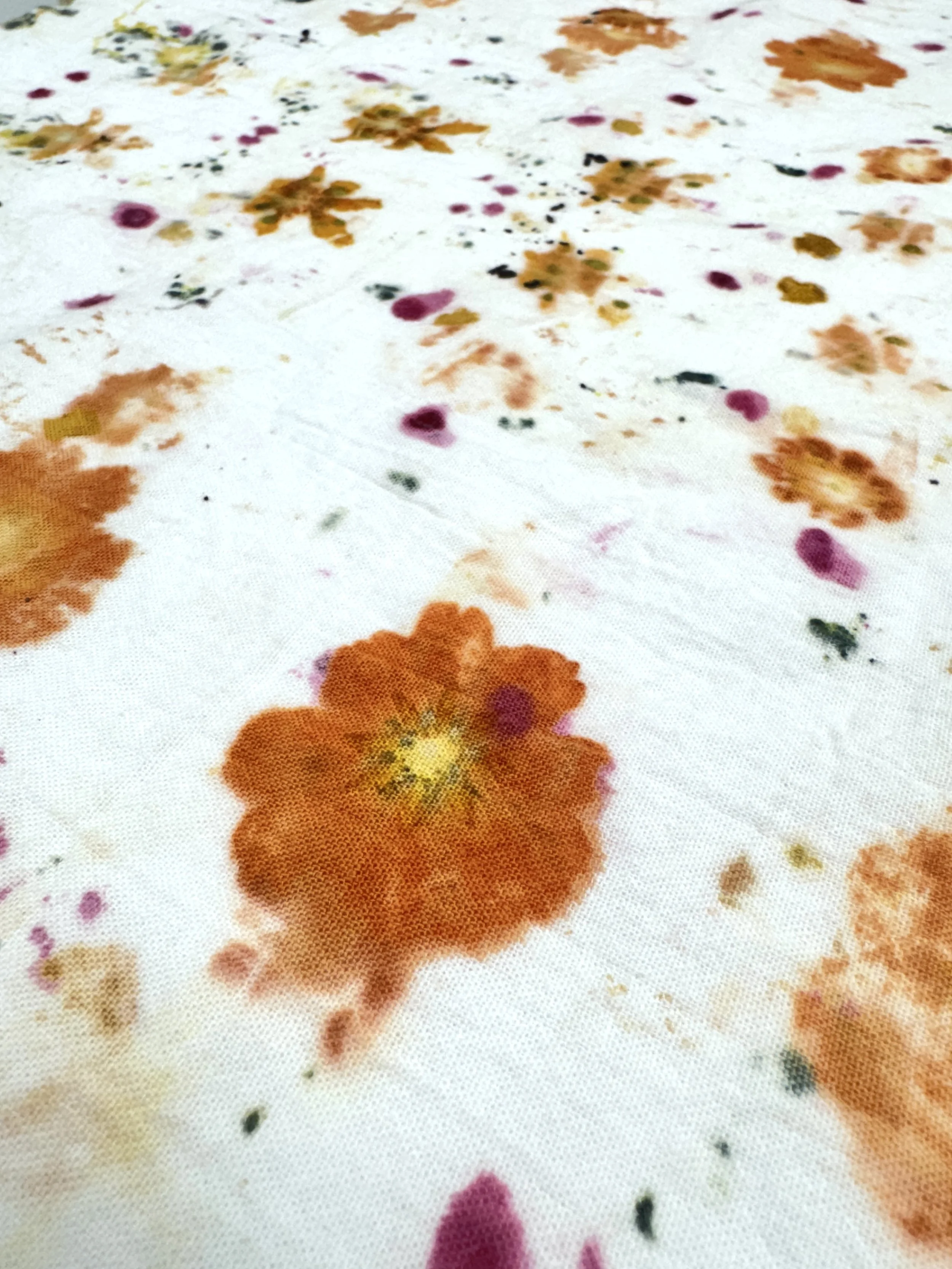
3) What are your favorite items to use for dyes? Are there any that would surprise us?
"Many of the materials used for dye are surprising with their color transformations. Red onion skins make olive green dye, cochineal bug shells make hot pink, logwood bark creates a dark purple, and avocado pits and skins make a blush-colored dye.
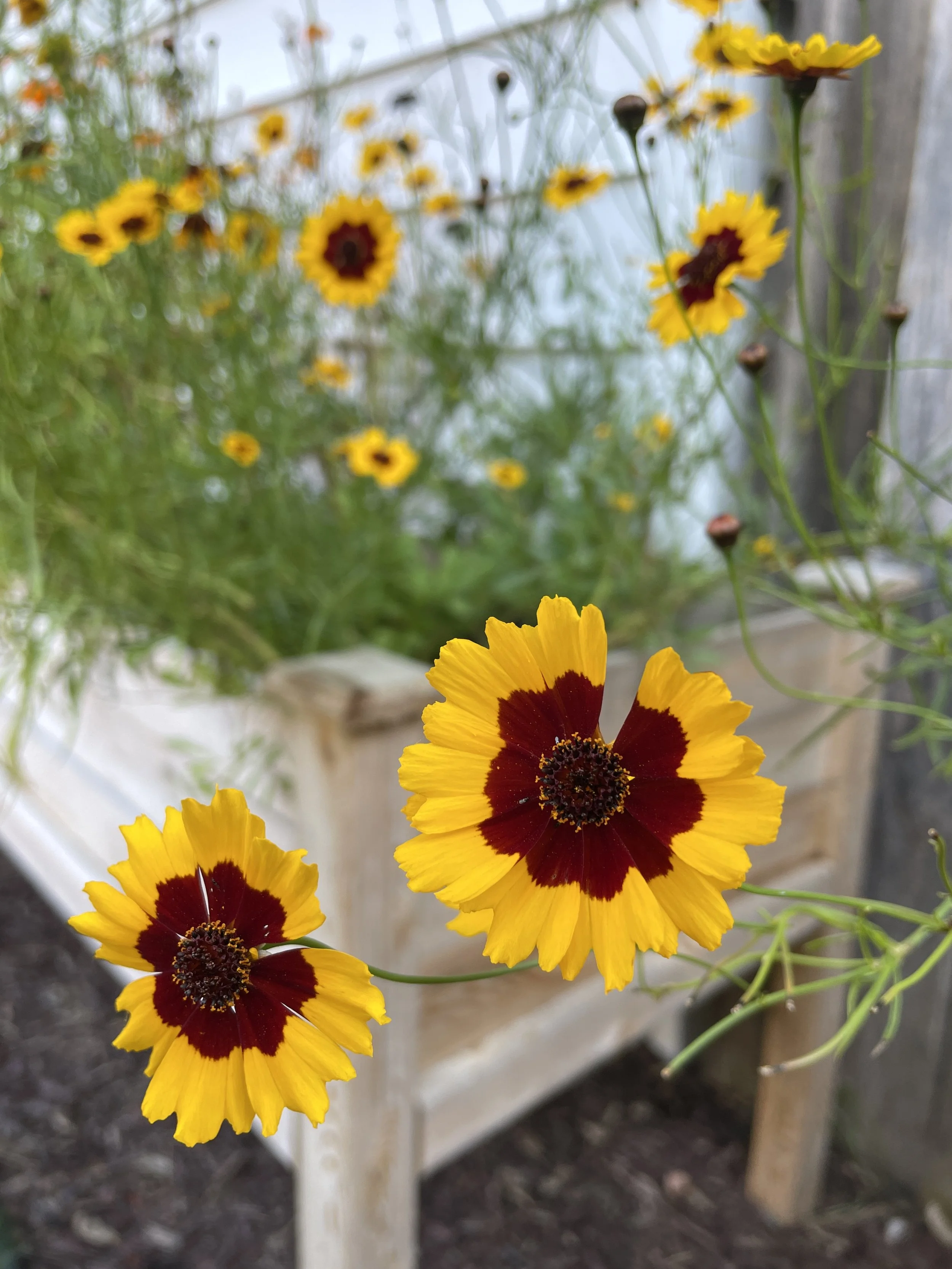
I love using flowers and leaves as well—coreopsis, cosmos, and scabiosa are my favorites! Experimenting to learn what colors the materials make and how you can modify the colors is my favorite part of the process."
4) Anything else you'd like to share?
"Watching the colors shift and imprint upon the fabric is a magical process. Many of the steps of the natural dye process require patience, which does not come naturally to me. It is a moving meditation for me as I create the dyes and watch the colors bloom, and my work is ever-evolving as seasons shift and the materials change."
Botanical Bounty Workshop: Try it Out!
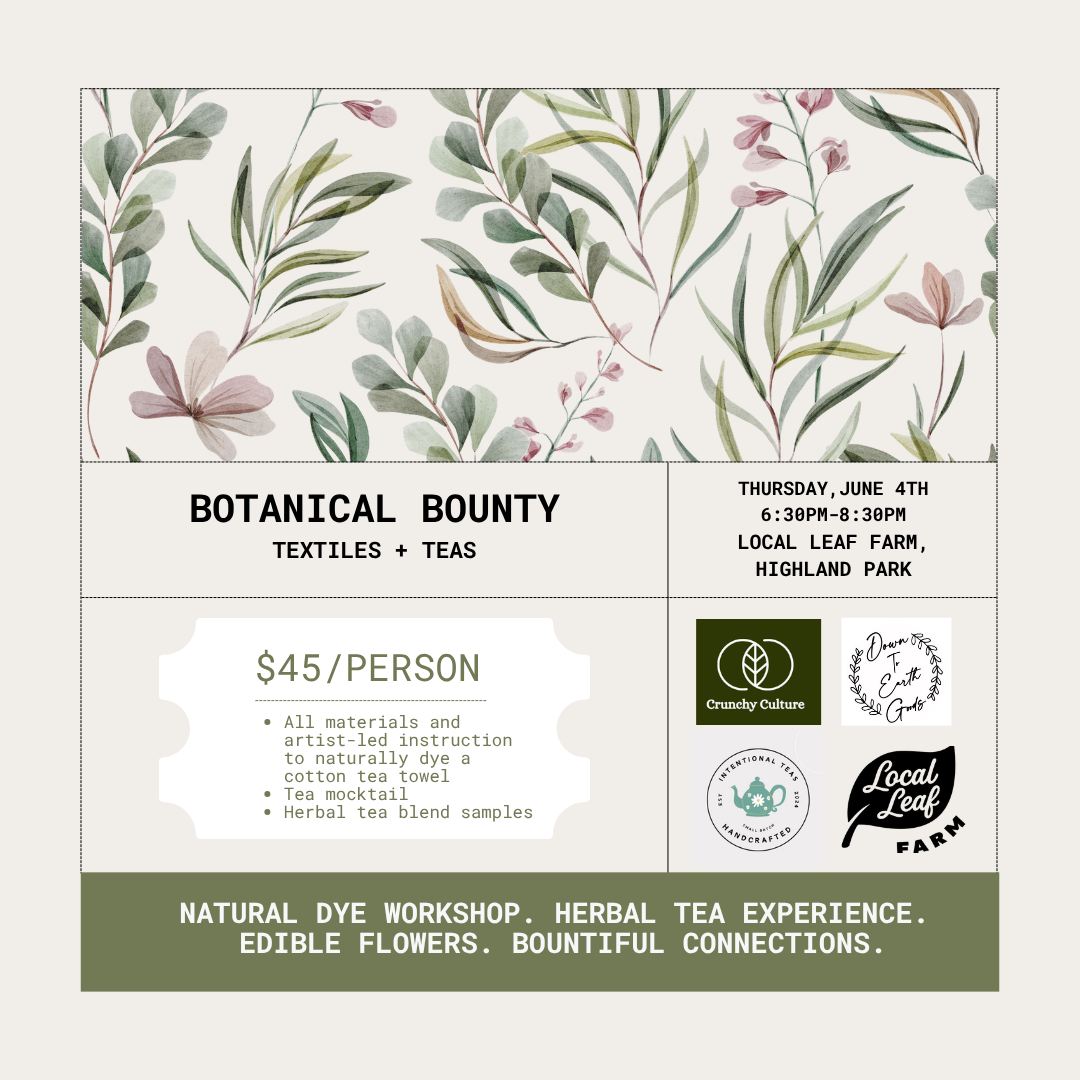
In this hands-on natural dyeing workshop, Erica will guide us through the step-by-step process of creating our very own naturally dyed tea towel. While we wait for the plant dyes to work their magic, we’ll enjoy a curated herbal tea experience with Intentional Teas and sample beautiful edible flowers from Local Leaf Farm.
[Book your spot!] (Note: Space is limited, so grab your ticket before it fills up!)
